TLDR;
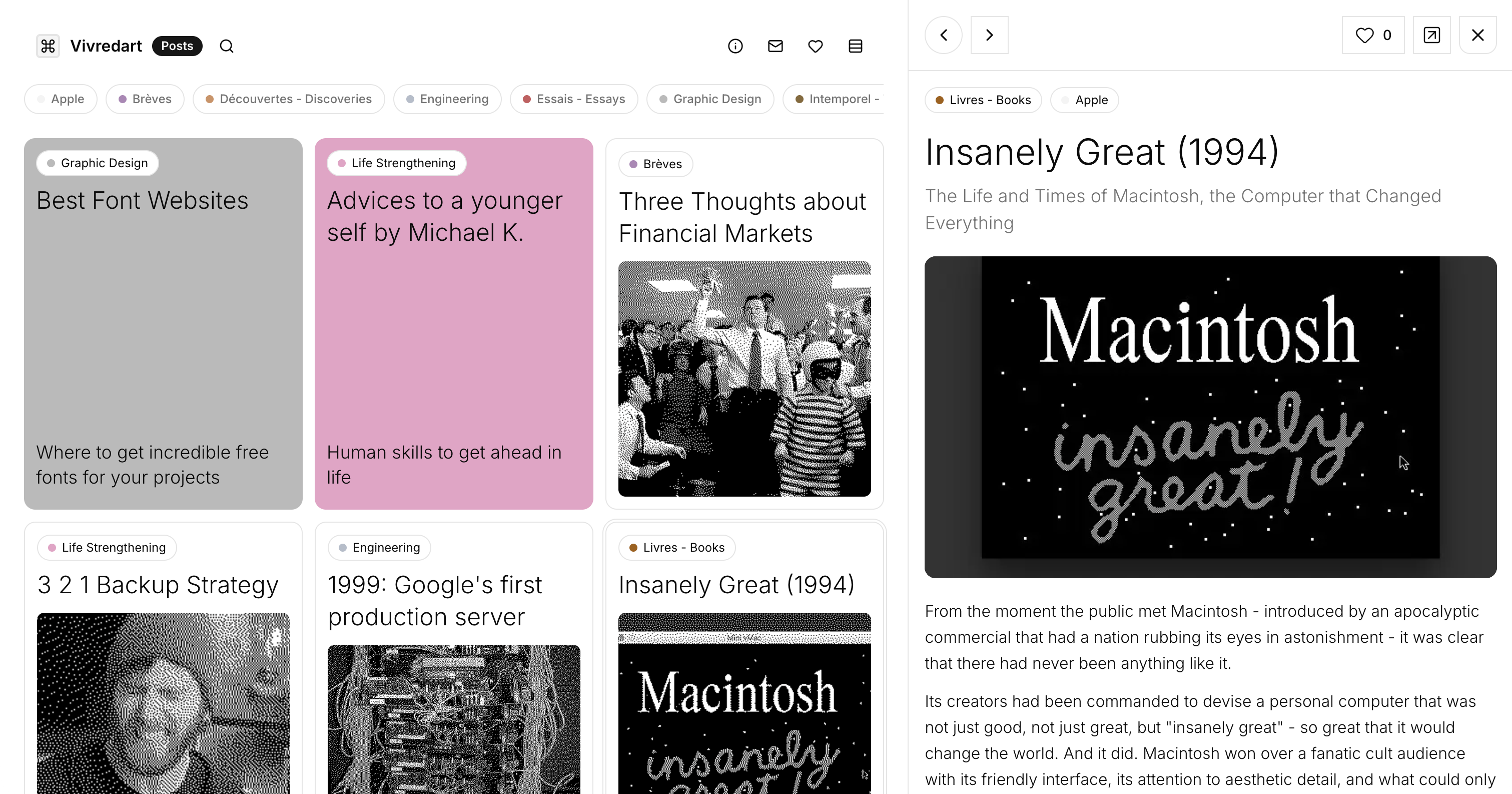
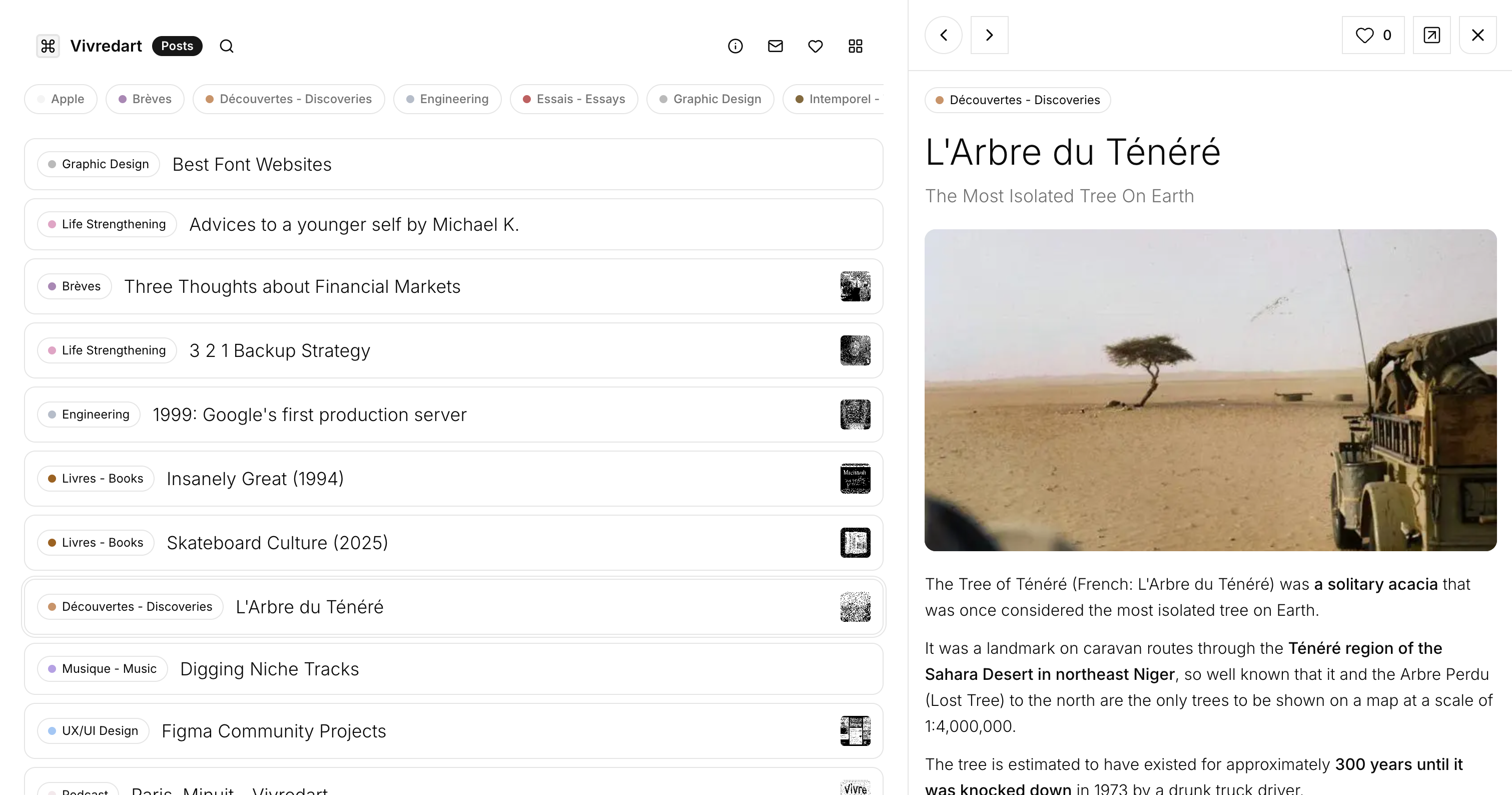
Vivredart is a personal website about Art de vivre: the French concept of the art of living. It acts as a public second brain: a doorway into passions, habits, recommendations, and memories.
The site covers a wide range of topics: Engineering, Neat Details, Timeless Products, Graphic Design, Typography, Life Strengthening, Music.
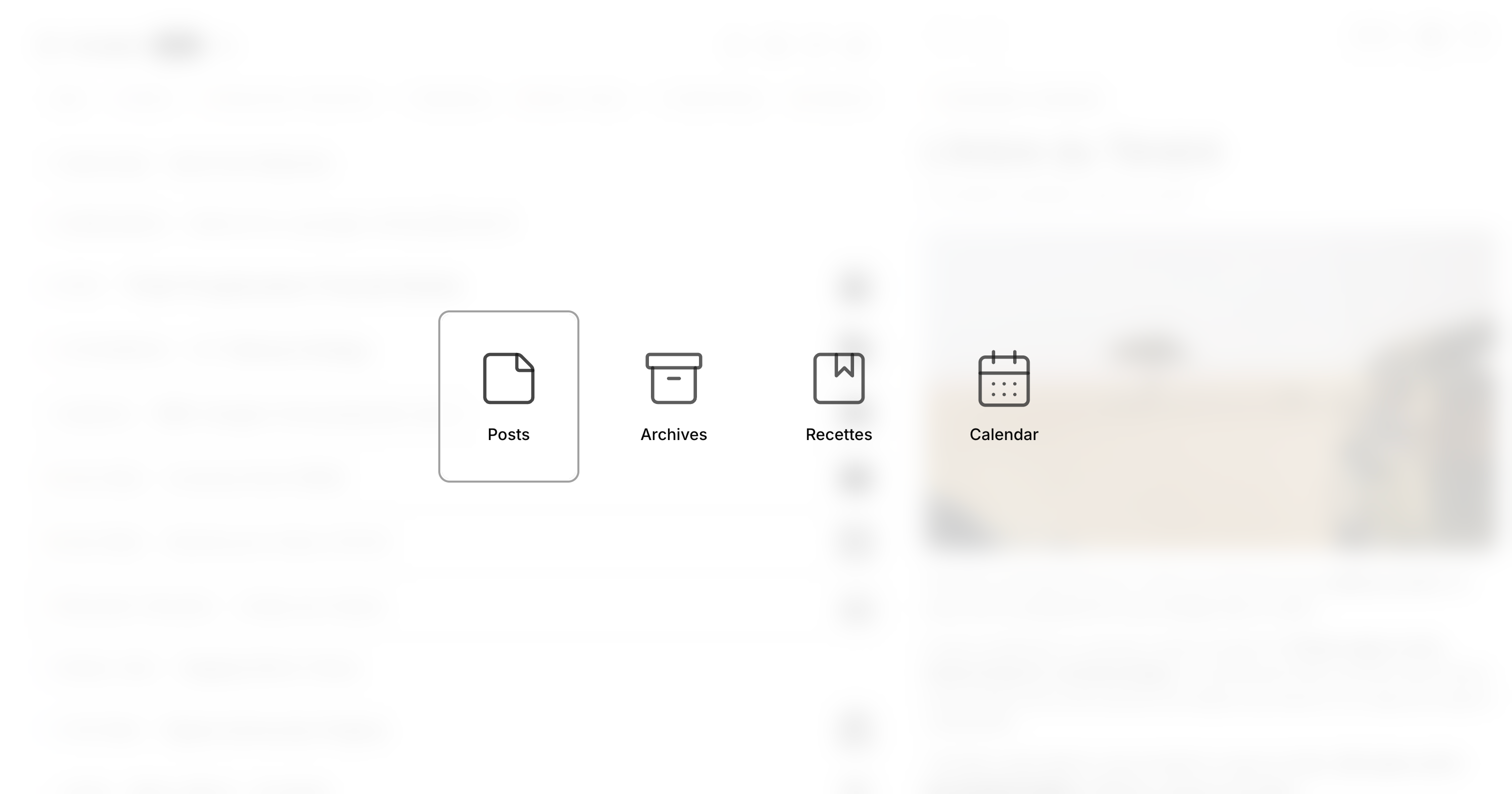
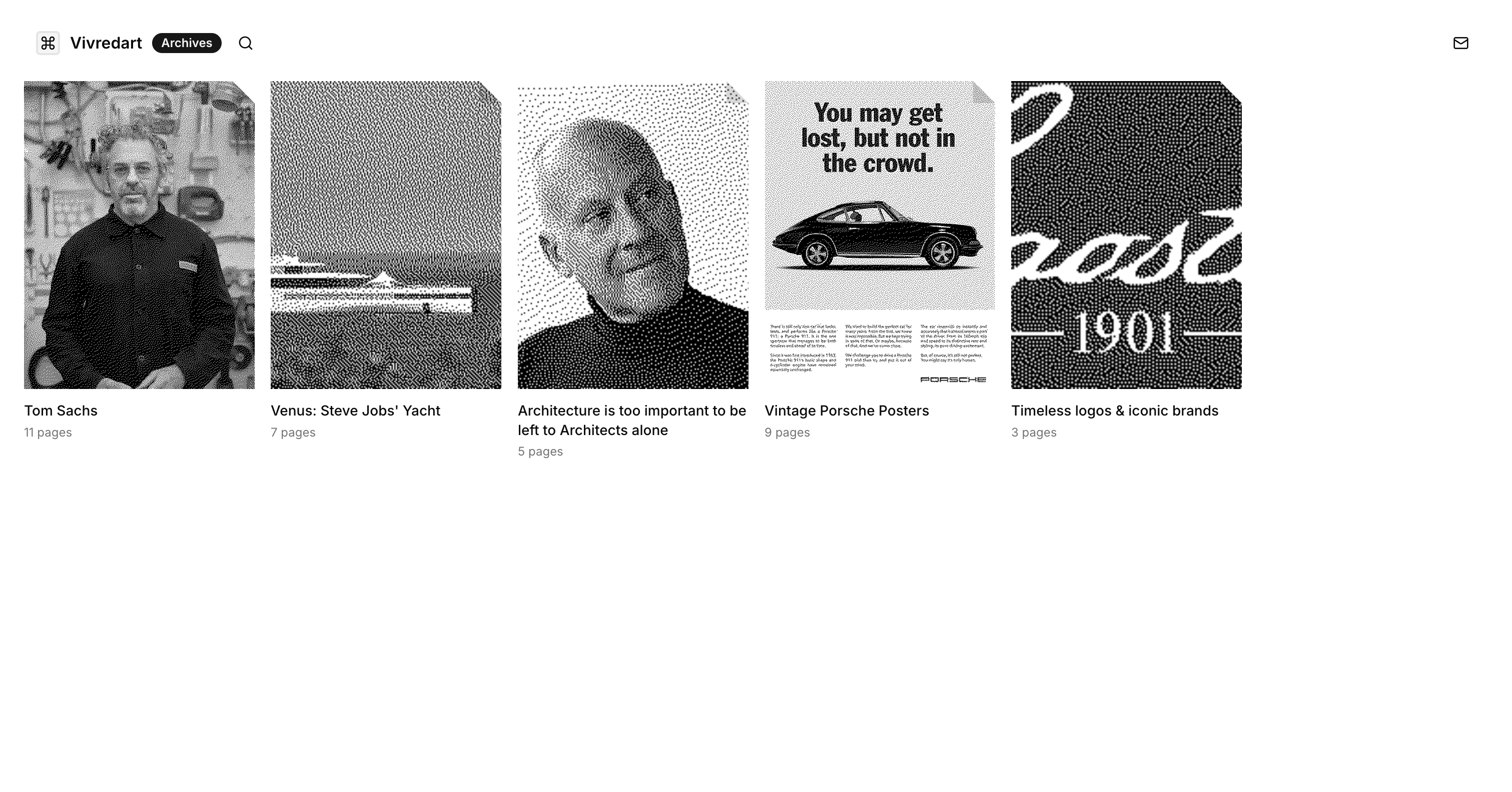
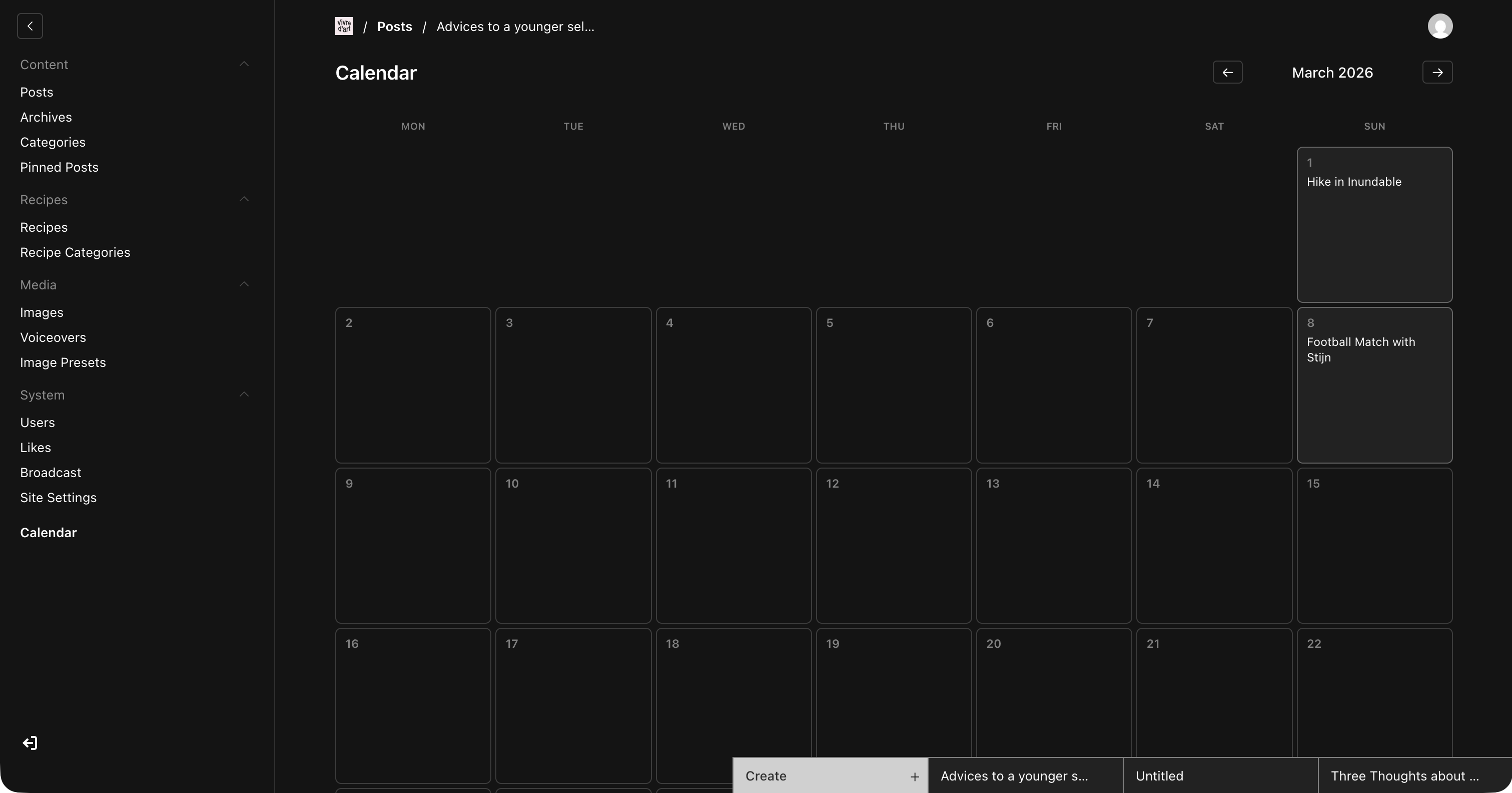
It is organized across several content types: posts, archives, recipes, and a calendar logbook.
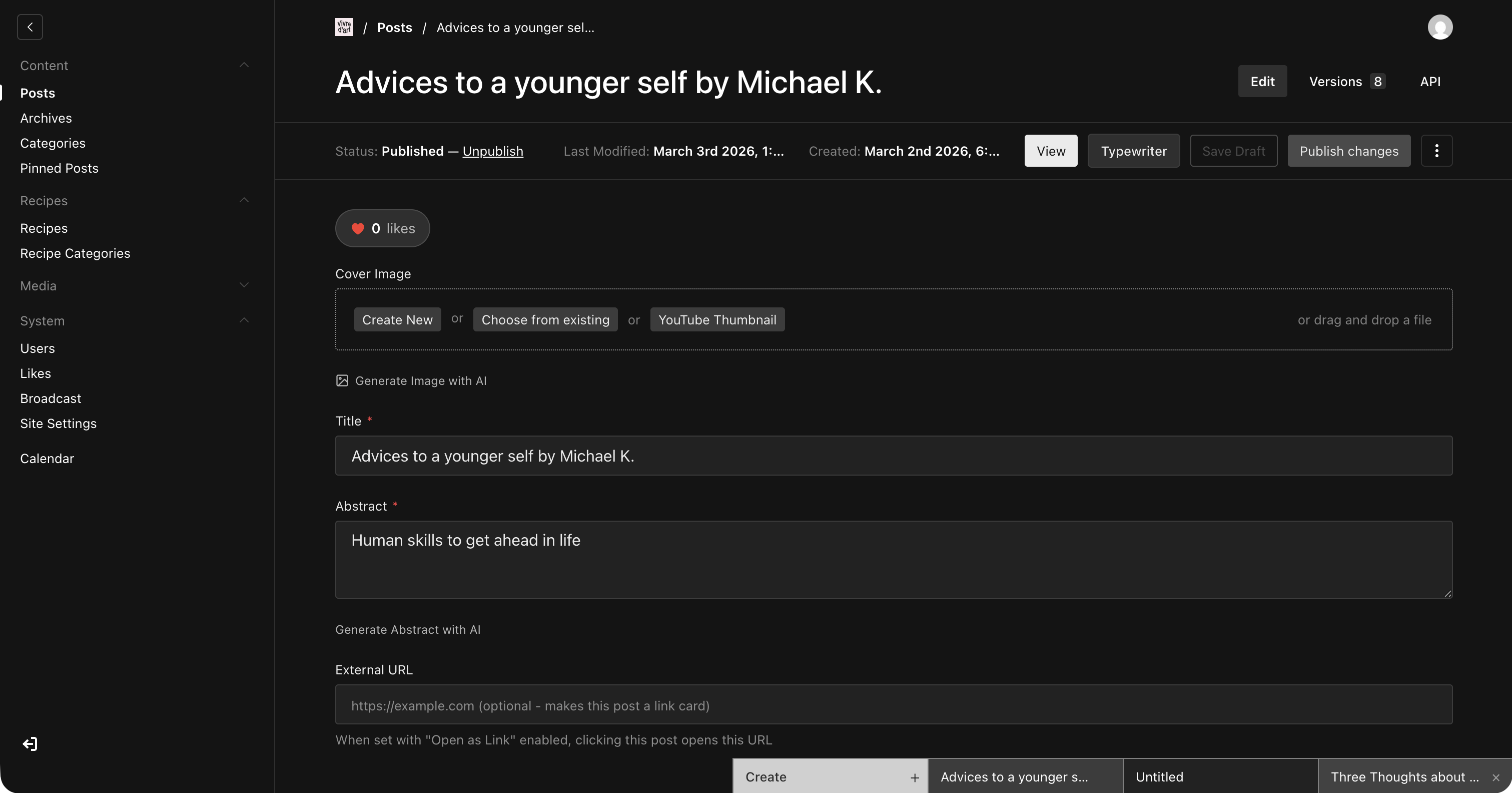
Built-in AI-infused admin panel accelerates content creation: from generating images to importing notes with the right tone.
Design is minimalist, squared with playful details, optimized for both mobile and desktop.
The issue
Personal websites are either sterile developer portfolios or abandoned WordPress blogs. The tools to share what you actually care about (a recipe, a memory, a visual collection, a passing thought) are scattered across a dozen platforms that own your content and kill it with algorithmic noise.
- Social media: great reach, zero ownership. Your posts drown in a feed you don't control
- Notion / second brains: powerful but private by default, ugly when shared, and not designed as a destination
- Blog platforms: rigid templates, no room for varied content types, and they all look the same
- Portfolio builders: optimized for showing work, not for sharing a life and often with expensive price points
There's no lightweight, beautiful, personal space where you can publish a recipe next to an engineering note next to a photo collection: all under one roof, with the speed and polish of a modern app.
Vivredart.com is my vision on what a blog should look and feel like.
Process
It started as a podcast in October 2023. Publishing it on the platforms using Acast but with limited reach.
I love the old web (even though I'm a 2002 kid), having a space that's truly yours, something that you build from scratch just for the sake of it. Not to make money, but to share your thoughts, knowledge and discoveries.
The first version was simple: posts with links to share thoughts in an efficient way. Short text content, no fluff. Then it grew with new universes:
- Archives: collections of images presented as digital issues: swipeable, page-by-page, with a paper-fold cover effect. A way to share visual memories without Instagram's compression and algorithmic burial
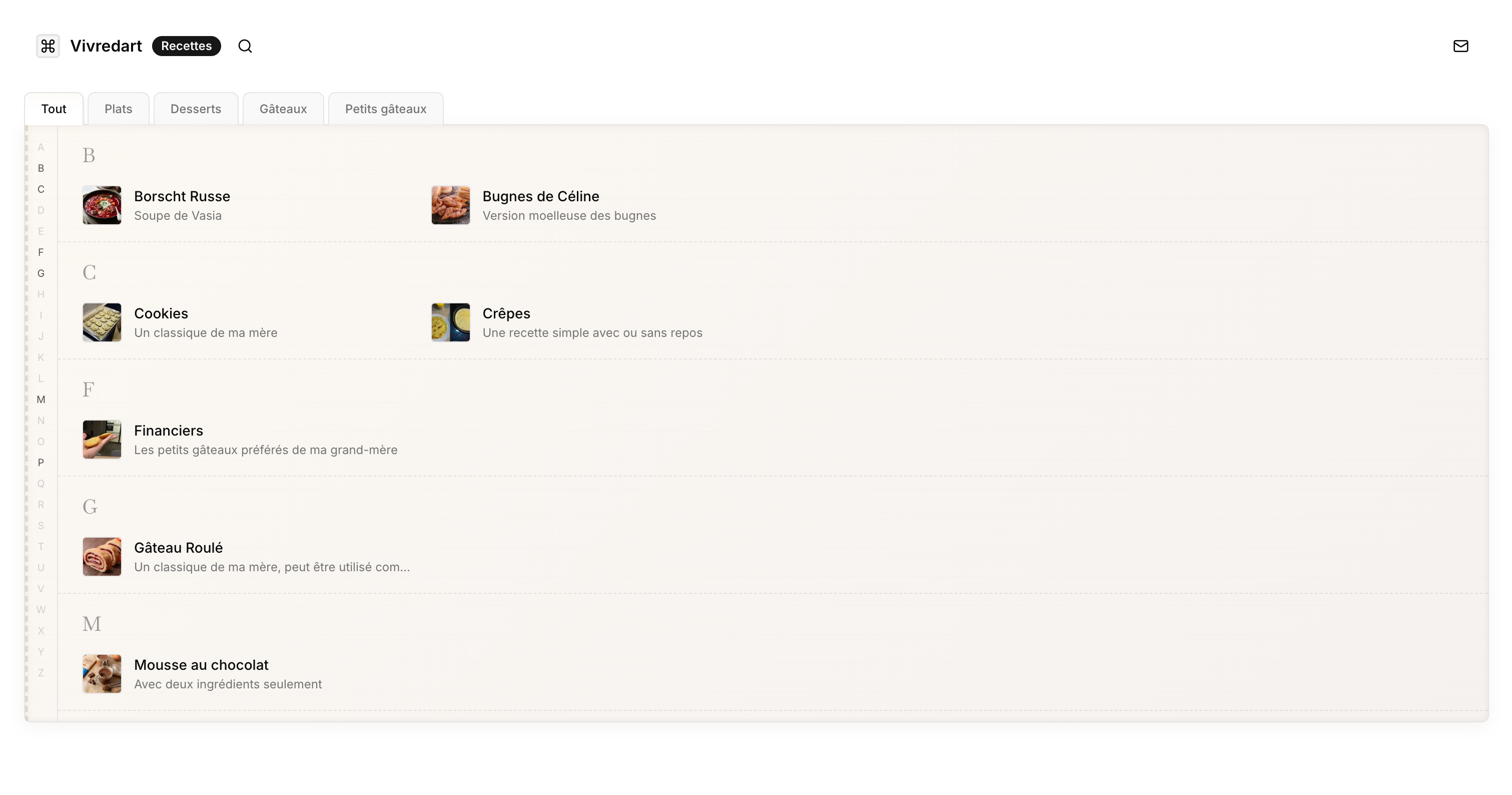
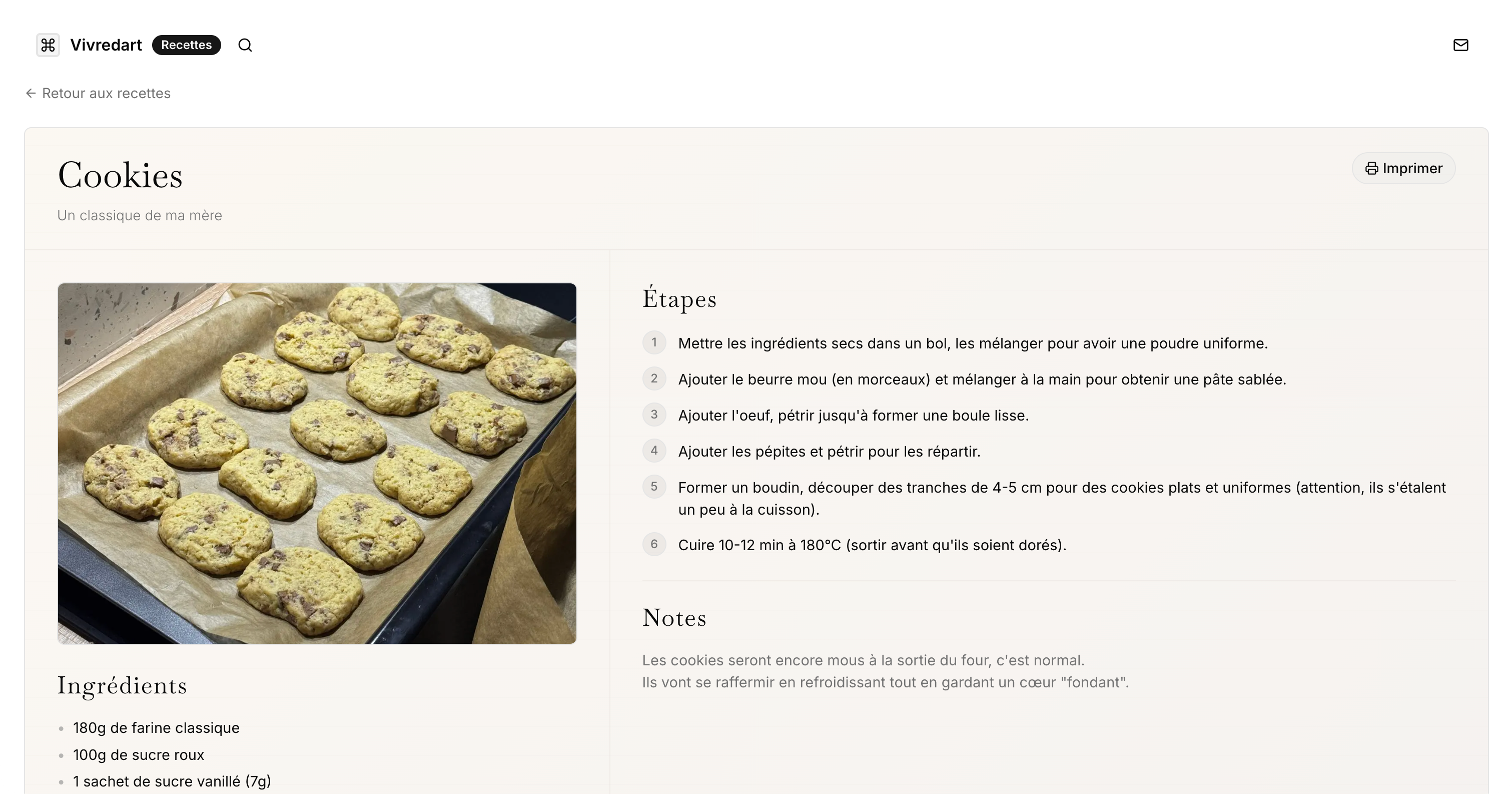
- Recipes: a public recipe book inspired by other cooks, with structured ingredients, steps, and sections. Because good recipes deserve better than a screenshot of someone else's blog
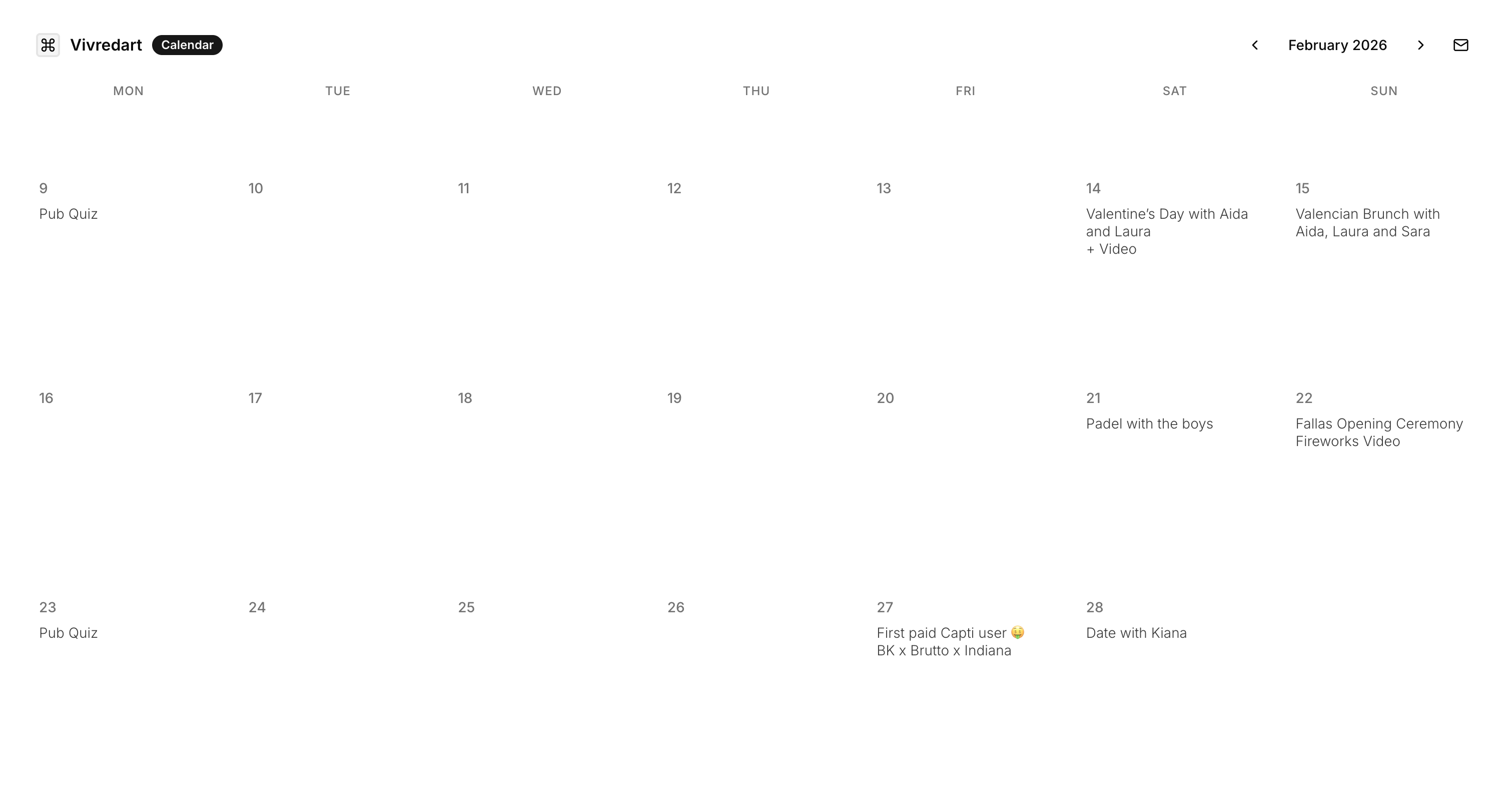
- Calendar logbook: a daily entry system to remember events. Not a diary: a timeline of life, publicly visible
- Posts evolved: cards with images and links, voiceover audio, categories, related content. Short-form thinking, long-form when it matters
I even added some other cool stuff:
- Voiceover Recording: an integrated voice recorder to bring my way of reading the content to the posts
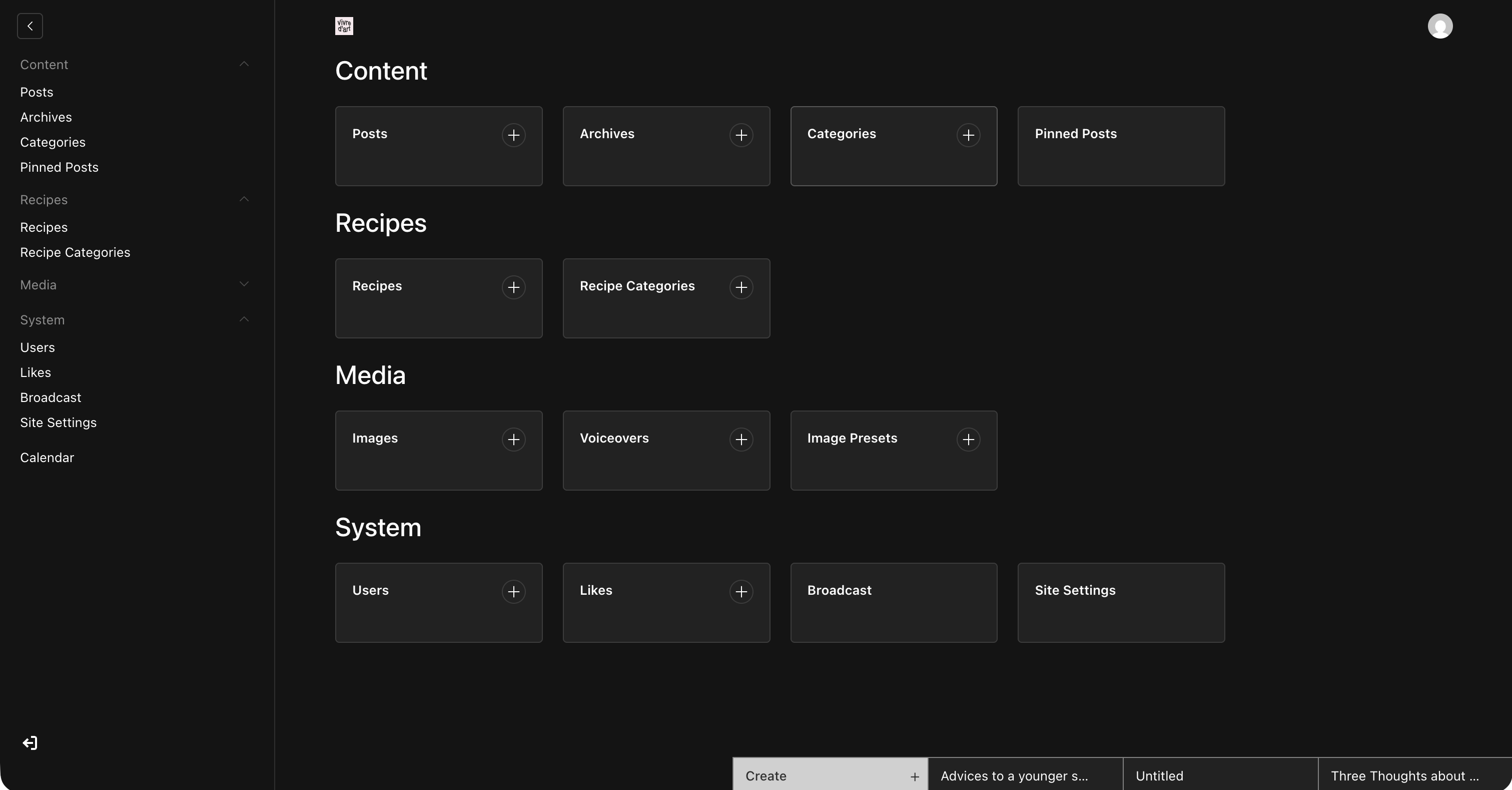
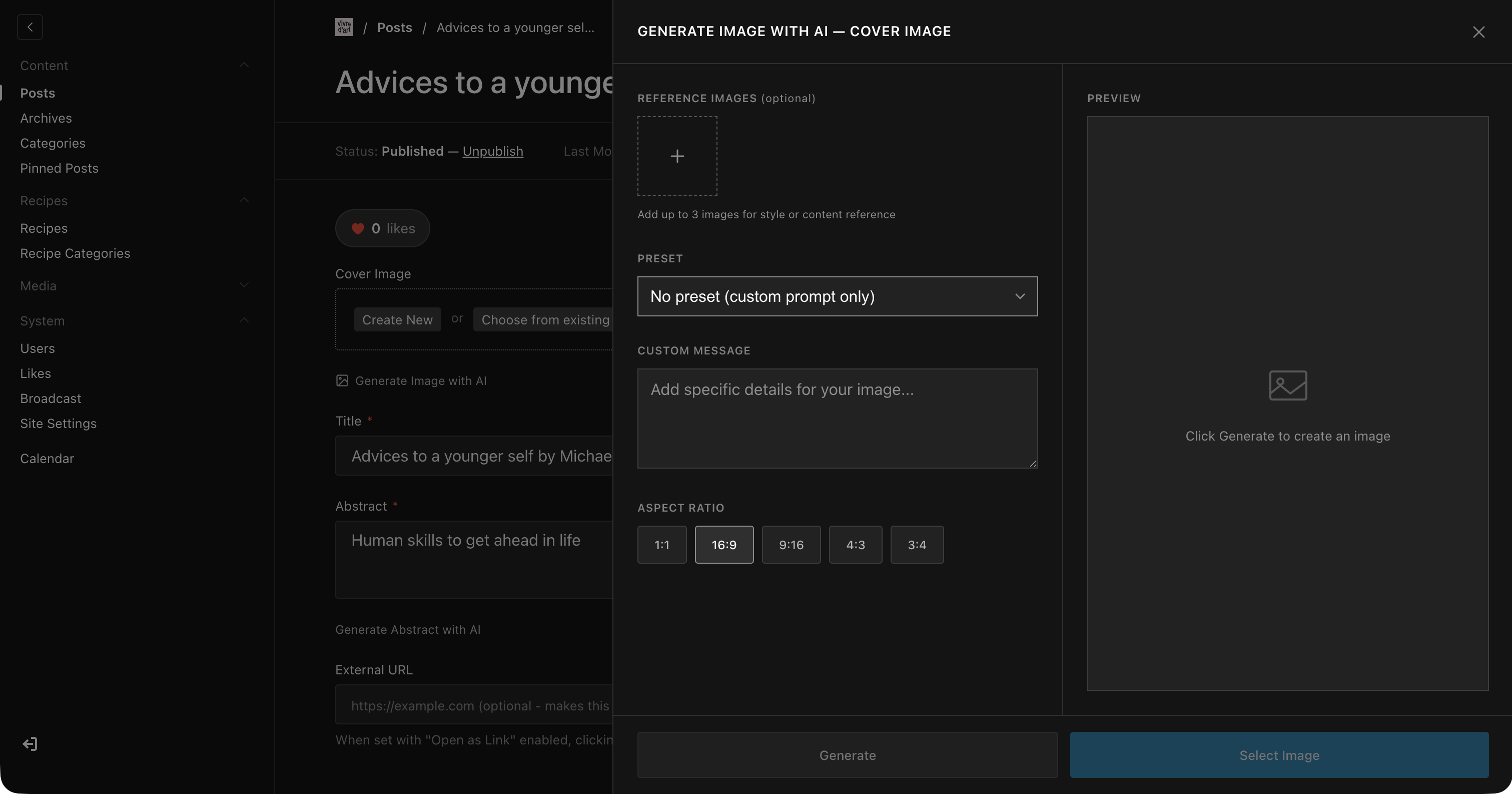
- AI in the admin panel: generating cover images from presets and reference photos, finding related posts across the entire catalogue, writing abstracts, importing Apple Notes and reformatting them into posts with the correct tone. Not AI for the sake of it: AI to remove friction between having a thought and publishing it
- Progressive halftone rendering: a Floyd-Steinberg dithering effect on post cards, because details matter and the web deserves more texture (or I'm just a real fan of that effect...)
- Newsletter broadcasts: first-publish triggers an email to the audience via Resend. No spam, no drip campaigns: just "here's a new thing I made"
As always, it was also an excellent way to learn new things.
The stack
Vivredart is built on Payload CMS because it's cool, modern, open-source, and deeply customizable: with a lot of tailor-made components added in.
- Next.js 15: React 19 framework with App Router and server components
- Shadcn/ui + TailwindCSS: Design system with OKLCH color tokens, light/dark themes, and accessible primitives
- Payload CMS 3: Opensource Headless CMS powering the admin panel, collections, globals, and auth. Heavily customized with custom fields, views, and hooks
- Vercel Postgres: Database layer
- Vercel Blob: Object storage for images and voiceovers
- Google Gemini: AI backbone: abstract generation, related post suggestions, image generation (text-to-image and image-to-image), and Apple Notes import parsing
- Resend: Transactional email and newsletter broadcasts
- PostHog: Analytics and session replays, consent-aware
- Vercel: Hosting and deployment
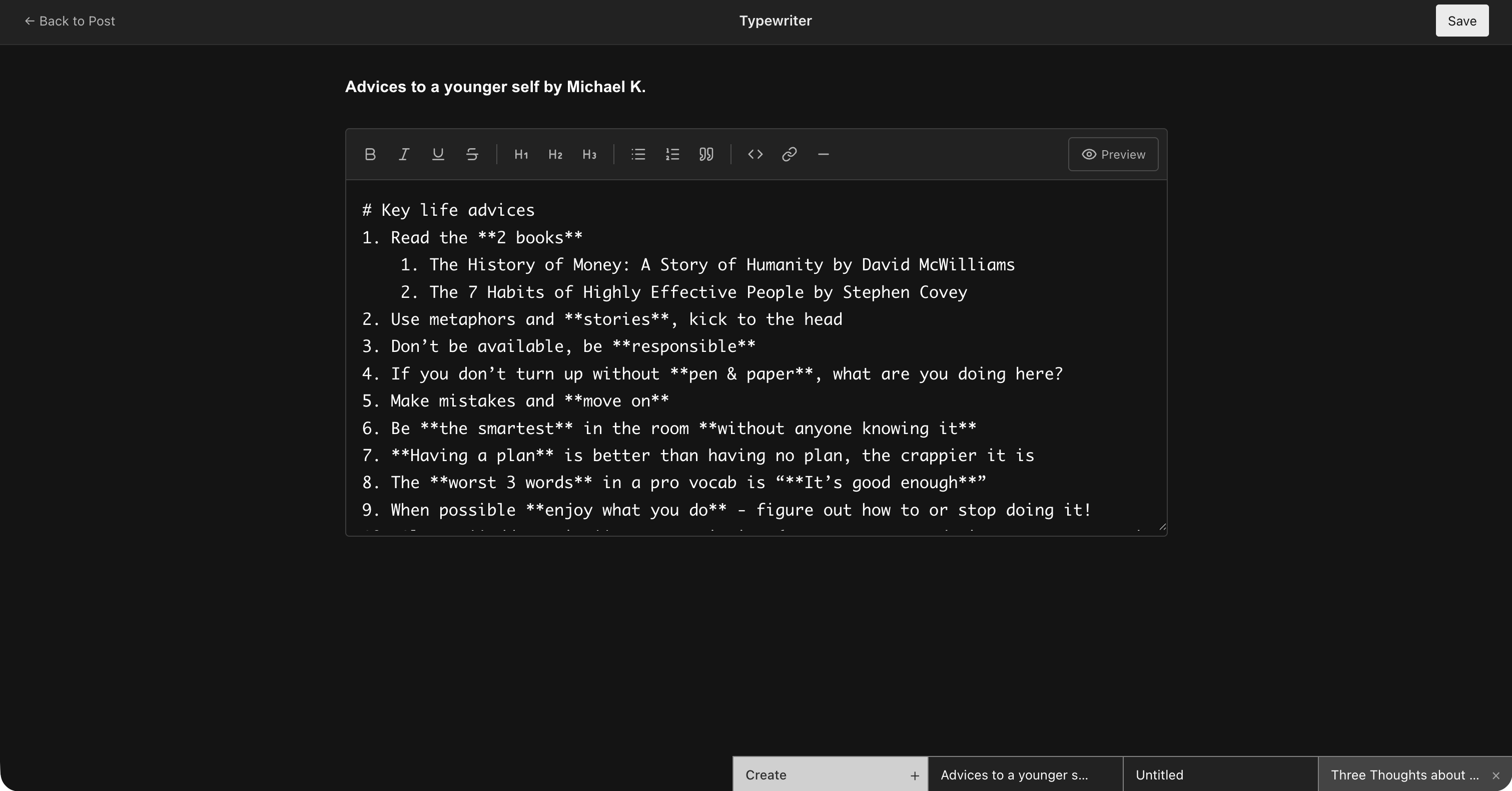
- Lexical: Rich text editor for post content
- Sharp: Image processing and responsive sizes (thumbnail through XL)
- Zod: Runtime validation
Communication and Marketing
Vivredart is not built for virality. It's built for the people who find it.
Discovery happens through:
- Direct sharing of specific posts, recipes, or archives with friends and peers
- Newsletter subscribers who get notified on new content
- The site itself acting as a living portfolio: linked from bios, conversations, and introductions
- Word of mouth: "here, look at this" moments
The value proposition is not reach. It's depth and permanence. Every piece of content lives at a stable URL, looks exactly as intended, and belongs to no platform but this one.
Deliverables
- The Platform: a fully functional personal website with multiple content types, responsive design, and dark/light themes
- AI Admin Tools: image generation with presets, abstract generation, related post suggestions, and Apple Notes import: all behind auth
- Newsletter System: audience management and broadcast emails on first publish via Resend
- Custom Payload Components: category selectors, color pickers, markdown editor, TypeWriter distraction-free writing mode, logbook calendar view, and more